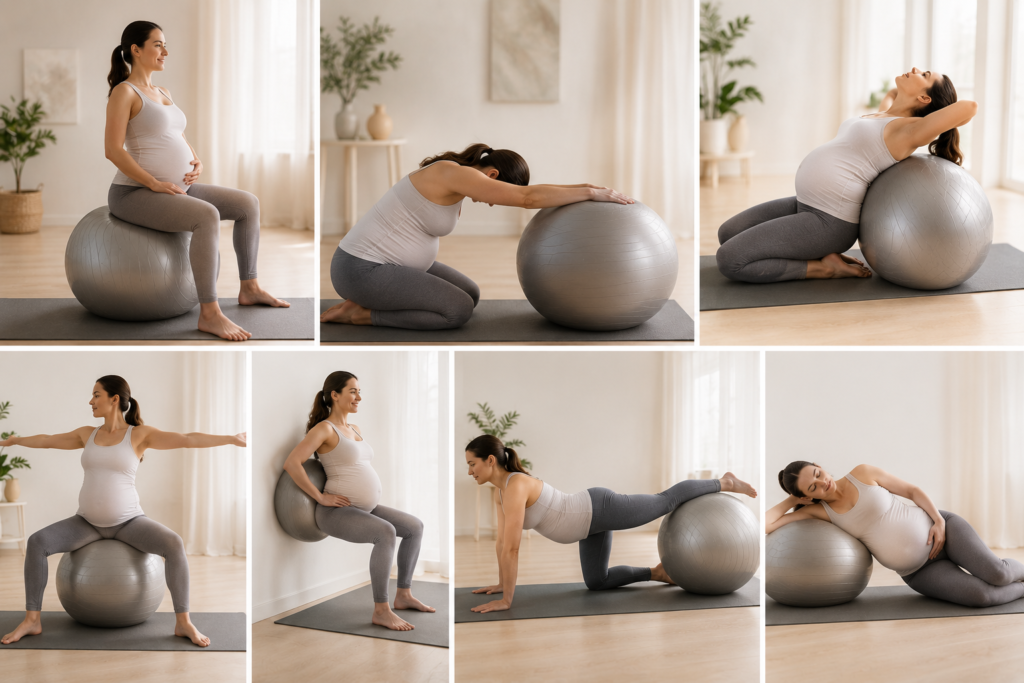
If you’re searching for safe, adaptable ways to stay active during pregnancy, pilates ball exercises for pregnancy stand out as a favorite. These low-impact workouts with a stability ball support core strength, balance, and flexibility, making them popular among expecting parents hoping for less discomfort, an easier birth, or simply more mobility. Typically, pregnancy pilates ball routines include gentle pelvic tilts, squats, bridges, and other moves that ease back pain and help prepare the body for labor.
Pilates ball exercises for pregnancy are gentle workouts using an exercise or birthing ball to support movements like seated pelvic tilts, squats, and bridges. These moves help strengthen the core and pelvic floor, boost posture, and ease discomfort, making them safe and beneficial for most stages of pregnancy when performed with proper guidance.
Let’s break down how pilates ball workouts for pregnancy actually work, why they matter, and which specific exercises give the best results—plus, what’s safe by trimester, and practical tips for tailoring routines as your needs change. The best part? Nearly all of these moves are accessible for beginners and don’t require a gym membership.
Benefits of Pilates Ball Exercises During Pregnancy
In the world of prenatal fitness, not every workout is designed with the pregnant body in mind. That’s where pilates ball routines for pregnancy really shine. Instead of forcing the body into rigid patterns, these moves work with the natural changes of pregnancy: shifting balance, growing belly, unstable ligaments, and increased demands on the lower back and hips.
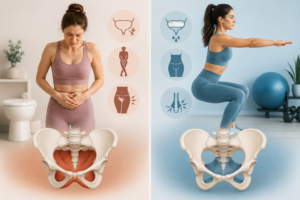
- Supports Core and Pelvic Floor Strength: As pregnancy progresses, a strong core acts like the body’s built-in support belt. These deep muscles help stabilize the spine and pelvis, making it easier to maintain posture and reduce common aches.
- Relieves Back and Hip Pain: The shifting center of gravity and hormonal changes mean that lower back and hip pain can sneak up unannounced. Pilates ball prenatal workouts gently target those tense areas, using movement to release pressure without straining joints [1].
- Improves Balance and Stability: Ever noticed how just walking across the room can feel different when pregnant? That’s no accident. A pilates ball introduces a little instability on purpose, forcing key stabilizing muscles to engage and adapt—preparing the body for life with a newborn as well.
- Enhances Flexibility and Mobility: The gentle motion of exercises like side stretches and figure eights helps keep joints supple, even as hormone-driven changes increase laxity in ligaments [2].
- Prepares for Labor and Delivery: According to recent studies, women who regularly practice pregnancy pilates ball workouts often experience shorter and more manageable labors [3]. The focus on pelvic mobility, breath, and endurance translates directly to the birthing suite.
- Boosts Mood and Reduces Stress: While most people chat about the physical perks, pilates ball workouts for pregnancy can work wonders for mental health, too. Gentle movement triggers endorphin release and supports resilience against stress or mood swings.
What really stands out is the adaptability. Whether a person feels super mobile or prefers to take things very gently, there are ways to modify nearly every exercise—making pilates pregnancy ball exercises accessible for a broad range of abilities.
Choosing the Right Pilates Ball for Pregnancy
Selecting the correct exercise ball (often called a stability, gym, or birthing ball) is more than a matter of color or brand. The size and firmness influence comfort, safety, and how effective each movement feels. In fact, the right-sized ball is arguably as important as the routine itself—because it dictates posture, hip positioning, and the ability to maintain balance [4].
| User Height | Ball Size (Diameter) | Best For |
|---|---|---|
| ≤5’1” | 55 cm | Smaller frames, extra knee clearance |
| 5’2”–5’10” | 65 cm | Most pregnant people |
| Above 5’10” | 75 cm | Extra leg length |
When sitting on the ball, the hips should be slightly higher than the knees, allowing the feet to plant firmly and the pelvis to tilt neutrally. Most “pregnancy pilates exercise ball workouts” suggest a slightly under-filled ball—firm but not rock-hard—so it provides some give while still offering support. The gold standard is anti-burst material, especially since weight and pressure fluctuate with pregnancy changes.
Here’s a tip from midwives: If in doubt between sizes, opt for the larger ball and let out a touch of air to adjust the height as needed. People often rave about swapping their office chair for a birth ball—it’s both a sneaky core workout and posture reset in one.
Safety Guidelines for Pilates Ball Workouts When Pregnant
Pregnancy is a time for thoughtful movement, especially with balance challenges, joint changes, and the overarching priority of protecting the baby and parent. Pilates ball exercises for pregnancy are typically low risk when tailored well, but there’s no one-size-fits-all. Safety starts with the following guidelines:
- Consult a healthcare provider before starting: OB-GYNs and maternity physiotherapists recommend getting the green light prior to new routines, especially if there’s any medical history or pregnancy complication [5].
- Stabilize the workout environment: Pilates balls roll by design, but a grippy mat, wall support, or ball base gives extra confidence—especially when sitting down or standing up.
- Hydrate and avoid overheating: Dehydration or overheating raises the risk of complications. It’s wise to keep cool, dress in layers, and keep water close by—sometimes the simple steps are the most overlooked.
- Mind posture and body cues: It’s normal for exercise tolerance and joint comfort to change throughout pregnancy. Watch for dizziness, breathlessness, pain, or discomfort, and pause right away if they occur.
- Limit certain positions: After mid-pregnancy, exercises lying directly on the back can compress a major vein (the vena cava), so most routines adapt to side-lying, seated, or hands-and-knees positions [1].
- Move at your own pace: Pregnancy pilates ball routines are about connection, not competition—slow, controlled movements trump high reps or speed every time.
Some providers even say, “If you can still chat through your set, you’re at the Goldilocks zone for intensity.” Overexertion, breath-holding, or pushing through pain are signs to scale back. As bodies become more relaxed in the later trimesters, safety becomes more about balance—literally and figuratively.
How to Prepare for Pilates Ball Exercises in Pregnancy
Beyond the obvious checklist (comfortable clothing, a supportive bra, cleared space), preparation is about tuning in. The body cues are there, and pilates ball prenatal workout sessions shine brightest when preparation is intentional.
- Choose a stable surface: Place the ball on a yoga mat or carpet, or use a ball ring if needed for extra security.
- Gather essentials: Water bottle, towel, and perhaps a sturdy chair or wall nearby for awkward transitions—especially as joints get looser.
- Start with a gentle warm-up: Cat-cow stretches, neck rolls, or light marches help lubricate the joints and cue the body to start moving. A few minutes of dynamic stretching pays huge dividends.
- Mind footwear: Barefoot is fine for many, but some prefer grip socks or low-profile athletic shoes for extra traction, especially on hard floors.
- Limit distractions: Multitasking can wait; presence wins the day here.
Oddly enough, some people find just sitting on the ball with feet planted is a warm-up in itself—after all, it’s a balance challenge from the start.
7 Simple Pilates Ball Exercises for Pregnancy
A well-rounded pilates ball routine during pregnancy requires only a handful of moves, each customizable by trimester and comfort level. These exercises blend support, mobility, and gentle strength-building for the areas that need it most. Here’s a closer look at each:
Seated Pelvic Tilts on the Exercise Ball
- What it is: A gentle rocking motion of the pelvis while sitting upright on the ball.
- Best for: Releasing lower back tension, activating the deep core, and practicing pelvic mobility for labor.
- How to do it: Sit centered, feet flat and knees at ninety degrees. Gently arch the lower back, rolling the pelvis slightly forward. Then, tuck the tailbone under to round the back. Move back and forth, inhaling and exhaling with the motion.
- Tips: Add tiny circles or side-to-side sways for extra mobility. This is also one of the safest “small pilates ball exercises for pregnancy.”
Wall Squats Using a Pilates Ball
- What it is: A squat performed with the ball wedged between the lower back and a wall, offering support and alignment.
- Best for: Strengthening the glutes, thighs, and pelvic floor while offloading pressure from the knees.
- How to do it: Stand with the ball against the wall and your lower back resting into it. Feet wider than hip distance, toes slightly out. Bend the knees, sliding down the wall with the ball until the thighs are roughly parallel to the floor, then rise with control.
- Tips: Never let the hips drop below the knees. This exercise is the gold standard in “pregnancy pilates ball workouts” for full-body support and active leg work [3].
Bridge Exercise on the Stability Ball
- What it is: A classic bridge, but with the added instability of feet or back on the ball.
- Best for: Targeting the hamstrings, glutes, and pelvic muscles. Especially effective for building labor support muscles.
- How to do it: Sit on the ball, then roll down so the upper back and neck rest on the ball, feet flat to the floor. Push hips up until the body is parallel to the floor, then lower with control.
- Tips: As pregnancy advances, use a smaller range of motion or shift to a mini-bridge with feet on the ball instead. Core engagement is key here—think about pressing the heels into the ball to keep it from rolling away.
Seated Figure 8s for Core Strength
- What it is: Drawing a figure eight shape with the hips while sitting tall on the ball.
- Best for: Opening up the pelvic region, mobilizing the lower back, and encouraging gentle core activation.
- How to do it: Sit with feet slightly wider than hips, chest lifted. Move the hips in a figure eight, tracing the shape with small, steady movement. The focus is not on speed but on smooth control.
- Tips: Picture massaging the base of the spine. This move can be mood-lifting in itself.
Side-Lying Inner Thigh Squeeze
- What it is: A side-lying move where the ball is squeezed gently between the knees or ankles.
- Best for: Working the inner thighs (adductors) and pelvic stabilizers, vital muscles for birth and postpartum recovery.
- How to do it: Lie on one side, knees bent. Place the ball between the knees. Gently squeeze for 3–5 seconds, then release, repeating with breath.
- Tips: If turning is tough, this move can also be adapted to sitting for late pregnancy comfort.
Supported Back Stretch With the Pilates Ball
- What it is: A gentle upper and lower back opener, using the ball as a prop for maximum support.
- Best for: Relieving tension between the shoulder blades, low back, and ribs—places that often beg for attention as pregnancy progresses.
- How to do it: Kneel with the ball in front, hands on top. Push the ball away as you lower the chest toward the floor, feeling a stretch along the back. Hold for several breaths before returning upright.
- Tips: Adjust the knees for comfort. This stretch is a favorite in most “fitness ball exercises for pregnancy” routines for its soothing effect.
Gentle Balance Ball Circles
- What it is: Small circular movements performed while sitting on the ball, designed to gently engage all stabilizing muscles.
- Best for: Waking up the deepest layers of the core, maintaining gentle joint mobility, and reducing stiffness.
- How to do it: Sit upright, feet planted. Slowly circle the hips in one direction, then the other, using the ball as a guide.
- Tips: Tiny circles feel safer as pregnancy advances—think about stirring a pot rather than hula-hooping. This is one of the classic “balance ball exercises for pregnancy.”
If you want to choose the best Pilates gears, check out the following articles:
6+ Best Aero Pilates Machine: Find Your Hidden Focus (2026)
Best Pilates Socks for Women and Men: Complete 2026 List
Modifications for Each Trimester
First Trimester: Most pilates ball exercises for pregnancy are fair game. The body is still adapting, joint laxity is increasing, but balance generally remains steady. Fatigue, nausea, and surges in relaxin hormone may influence session length or frequency. Moves that involve lying on the back are typically still okay.
Second Trimester: Increased abdominal size changes balance and may reduce comfort in supine positions. Shift emphasis to side or seated positions. Reduce any motion that feels unstable; remember, the center of gravity is changing.
Third Trimester: Core exercises switch to upright, hands-and-knees, or side-lying variations. Balancing becomes trickier—keep a wall or sturdy structure nearby. Avoid prolonged back-lying moves to prevent vena cava compression. Gentle hip circles and rocking movements on the ball can help ease pelvic tension, encourage optimal baby positioning, and support labor preparation [5].
Here’s the beauty: nearly every “exercise ball pilates exercise for pregnancy” can be made more accessible. Reduce range, add props (like a pillow), slow the pace, or perform fewer repetitions.
Pilates Ball Routines for Pregnancy: Sample Weekly Plan
Setting a regular routine is about consistency and comfort. Here’s an editor-verified example of how to structure a safe pilates ball routine for pregnant people, scaling the intensity up or down as needed:
| Day | Routine | Focus / Notes |
|---|---|---|
| Monday | Pelvic Tilts, Wall Squats, Balance Ball Circles | Warm up, gentle core and legs |
| Wednesday | Bridge Exercise, Seated Figure 8s, Supported Back Stretch | Glutes, core, back mobility |
| Friday | Side-Lying Inner Thigh Squeeze, Gentle Ball Circles | Pelvic floor, adductors, balance |
| Daily/As needed | Bounce/sit on ball for 5–10 min | Relieve back pain, encourage baby’s engagement later in pregnancy |
Each session generally lasts 20–30 minutes, including warm-up and cool down. Flexibility is key—sometimes a single move is enough to ease discomfort.
Pilates Ball Exercises for Pregnancy: Tips for Better Results
- Prioritize breath and posture: Breathing deeply expands the ribcage, reduces tension, and promotes core engagement without unnecessary strain.
- Tune in to body feedback: Each week may feel different—embrace modifications as part of the process rather than a sign of “doing less.”
- Incorporate mini-breaks: Pausing between sets helps prevent fatigue, especially in later trimesters.
- Combine with other gentle activities: Prenatal yoga, walking, and swimming can complement “pregnancy pilates ball exercises” for a holistic approach.
- Enjoy the mindful aspect: It’s just as much about building awareness and confidence as about strength or flexibility. People often find these routines become the highlight of the day.
FAQ: Pilates Ball Exercises for Pregnancy
Is the Pilates ball good for pregnancy?
Yes, the pilates ball is widely recognized as safe and beneficial for most pregnancies. Its support allows for low-impact strength, mobility, and balance work, with the added bonus of being highly adjustable to changing needs. Nearly all reputable fitness guides for pregnancy mention pilates ball routines as part of best practice for maintaining movement and reducing discomfort [1].
When should you start using a birthing ball in pregnancy?
Most experts suggest using a birthing or fitness ball as early as the first trimester and continuing through to labor and postpartum. Earlier adoption helps with posture and comfort, while regular use in the third trimester can ready the pelvis for birth and encourage the baby into an optimal position. Of course, it’s always best to check with a maternity care provider for personalized timing [4].
Does Pilates help lower cortisol?
Pilates—especially when focused on mindful movement, breath, and core engagement—has been shown to support stress management and may contribute to lower cortisol levels. For those navigating the ups and downs of pregnancy, these routines can anchor both body and mind in the present, naturally calming the nervous system and dampening stress responses [2].
What Pilates exercises can you do when pregnant?
Gentle, supportive movements take priority: seated pelvic tilts, wall squats, supported bridges, side-lying squeezes, back stretches, balance ball circles, and figure eights top the list. What’s consistent among “pregnancy exercise ball pilates exercises” is the focus on core stability, pelvic mobility, and adapting range of motion as needed. Avoiding moves that are strenuous, require lying flat after mid-pregnancy, or challenge balance too much is wise. If in doubt, always consult a professional for modifications aligned with personal needs.
Conclusion: Key Takeaways and Next Steps for Pregnancy Pilates Ball Workouts
Staying active during pregnancy doesn’t call for flash or fancy tools—some of the most effective results come from simple moves on an exercise ball, done with intention and care. Pilates ball exercises for pregnancy deliver a rare mix of support and strength, addressing real-life challenges like back pain, fatigue, and preparation for birth. The best results come from consistency, body awareness, and regular tweaks matched to trimester changes.
So if you’re considering adding pregnancy pilates ball workouts to your weekly routine, remember: Start gently, listen in, and let the ball work with your changing body. Pregnancy is a patchwork of changing sensations and needs; these exercises act as a steady companion, not just for fitness, but for daily restoration. A few minutes a day can yield real benefits—not just for birth preparation, but for feeling strong, balanced, and present in the months leading up to meeting your baby.
References
- American College of Obstetricians and Gynecologists. Exercise during pregnancy. ACOG. 2023.
- BabyGO®. 9 easy pregnancy ball exercises you NEED to know. 2025. https://babygo.uk/blogs/news/easy-pregnancy-ball-exercises
- Cradlewise Staff. 10 Pilates ball pregnancy exercises that you’ll love. Cradlewise. 2026. https://cradlewise.com/blog/pilates-ball-pregnancy-exercises
- BODi. 9 Pregnancy Ball Exercises for Expecting Moms. March 8, 2024. https://www.bodi.com/blog/pregnancy-ball-exercises
- Momcozy Care Team. 15 Pregnancy Exercise Ball Workouts to Stay Strong, Comfortable, and Labor-Ready. March 16, 2026. https://momcozy.com/blogs/pregnancy/pregnancy-exercise-ball-workouts