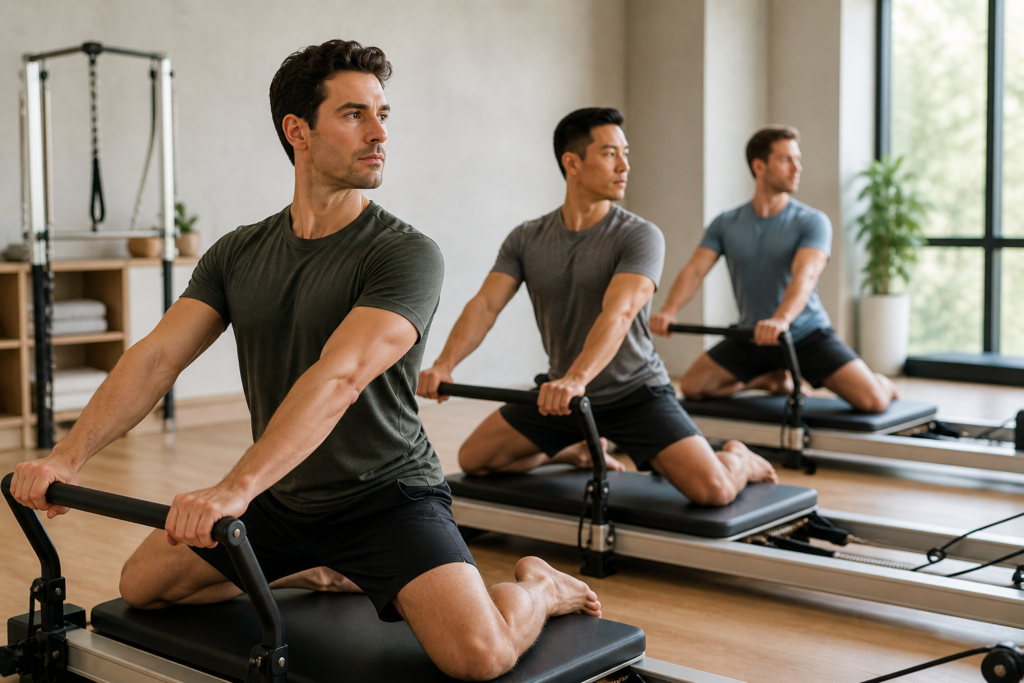
Do men do Pilates? Yes, men do Pilates—more now than ever before. Pilates was created by a man, Joseph Pilates, with whole-body strength, flexibility, and injury prevention at its core. Today, increasing numbers of men participate in Pilates classes, find real gains in performance, and use Pilates exercises as a regular part of their fitness journeys.
Understanding Pilates: Origins and Core Principles
To really understand why men do Pilates, it helps to know where this discipline came from and what it was designed to achieve. In the gritty landscape of early 20th-century Germany, Joseph Pilates—himself a boxer, gymnast, and self-described “physical-culture” enthusiast—developed his eponymous system to rehabilitate injured soldiers and later dancers. He called it “Contrology,” and at its core, Pilates was always about restoring and building practical, functional strength.
What makes Pilates tick? Think focused, controlled movements, a strict awareness of breath, and a relentless pursuit of body alignment. The method targets the muscles other workouts often ignore—your stabilizing “core,” the deeper abdominals and back muscles that set the foundation for every move you make. It’s less about heavy lifting and more about strength that shows up in everyday life—carrying groceries, climbing stairs, or yes, dominating on the soccer field.
Over time, Pilates blossomed beyond the confines of injury rehab or dance, finding fans among athletes, casual movers, and anyone who’d rather not creak out of bed every morning. The beauty lies in its adaptability. Pilates exercises can be scaled up for competitive athletes or dialed down for those just looking to stand taller and ache less.
It’s a method that was never meant for a single gender. Early classes were packed with men aiming to reclaim their bodies from injury and develop a movement precision that made daily life easier, not harder.
Breaking Stereotypes: Do Men Practice Pilates?
For decades, Pilates has faced a marketing identity issue: walk into a studio, and most mats and reformers might be filled with women. But that’s not due to a lack of suitability—rather, social patterns and old-school gym culture have long painted Pilates as “softer” or “less masculine.” Yet the reality tells a much different story.
The truth is, men practice Pilates globally, across ages and backgrounds. In fact, after the COVID pandemic, one report cited a 71% year-over-year surge in male studio membership in the United States[1]. From professional athletes to men rehabbing old sports injuries, the narrative is shifting rapidly. There’s a distinct sense that Pilates isn’t just for flexibility—men are increasingly coming for performance, longevity, and pain relief.
What’s holding some guys back? Frankly, the answer’s more about perception than the physical reality. When men do Pilates exercises, common reactions include surprise at the muscle engagement—invisible, until you feel it the next morning in places weights never reached. Social media and online forums show a growing number of men sharing their success stories, knocking down long-standing stereotypes in the process.
- Pro athletes: Basketball icons like LeBron James credit Pilates for keeping them strong and agile.
- Everyday men: Office workers and weekend warriors use Pilates to stay pain-free and active for longer.
- Older men: Increasingly turn to Pilates for safe, low-impact movement as they age.
Common searches—“do men practice Pilates,” “do men participate in Pilates classes,” and “are men doing Pilates”—all point to one reality: not only do men do Pilates, but the community is growing, vocal, and already seeing results.
Top Benefits of Pilates for Men
Physical Strength and Flexibility
Men often approach Pilates expecting easy stretching. Reality check: it’s strength training in disguise. More specifically, Pilates builds the stabilizing muscles deep within the body—the “inner armor” that protects joints and delivers power when it counts[2].
The payoff? Greater flexibility, mobility, and a kind of control that doesn’t just help in the gym. It’s standing taller at work, picking up kids without wincing, or running without the drag of tight hips or hamstrings. Many men are surprised just how quickly Pilates exposes gaps left by other routines—those neglected areas responsible for balance, posture, and resilience.
Recent studies have even shown that men who commit to just two or three Pilates sessions per week over a matter of weeks can see measurable gains in mobility and core muscular endurance[3]. Flexibility becomes the byproduct, not the goal.
Injury Prevention and Rehabilitation
Few things humble a person quite like persistent back pain or repeat strains. While heavy lifting and competitive sports get attention for building muscle, they also produce wear and tear—and men, statistically, have tighter hamstrings and stiffer backs than women[4].
Pilates tackles this through thoughtful, controlled movement—retrains the body, rather than punishing it. For those recovering from injury, Pilates adjusts. The method emphasizes alignment and muscle balance, engaging the weak links before they fail. It’s not a magic cure but an effective and research-backed system for getting from “can’t move” to “moving better.”
Picture a seasoned runner left sidelined with hip or ankle pain. After a few weeks of Pilates, they often notice improved joint function and fewer twinges—sometimes sharing that old aches simply fade away. It’s a result of targeting both the big movers and the micro-stabilizers that keep things in line.
Improved Athletic Performance
It’s no accident that pro athletes—from surfers to football players—are swelling the ranks of men doing Pilates classes. Athletic performance rarely comes down to brute strength alone. Agility, balance, stamina, and joint health form the backbone of lasting success.
- Stronger Core: Essential for power transfer in any sport, from swinging a bat to driving off the line in football.
- Increased Flexibility: Reduces the chance of tears and strains during sudden movement.
- Endurance and Balance: Key for holding form in the final minutes of any game.
- Adaptable Strength: Pilates doesn’t compete with traditional lifting, but complements it by improving movement quality and supporting heavier lifts.[5]
Athletes often remark that Pilates “connects body to mind” with a focus rare in other training. The takeaway? The movement quality gained from Pilates quietly props up victories in the gym, on the field, and, just as importantly, in everyday life.
One of the biggest questions is whether Pilates is Cardio. If you want to know more, read: Is Pilates Cardio? Find Out What Experts Say (2026)
Pilates Exercises Men Commonly Perform
Curious what Pilates looks like in practice—beyond glossy Instagram posts? The answer varies, but several staple exercises come up time and again among men, regardless of their starting point.
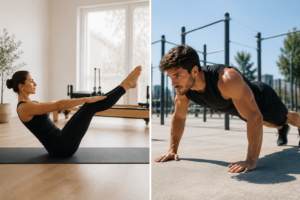
- The Hundred: This classic mat exercise works breathing, core, and stamina—sometimes described as “deceptively simple, secretly brutal.”
- Single-Leg Stretch: Challenges coordination and pelvic stability, crucial for runners and lifters alike.
- Articulating Bridge: Activates the posterior chain (glutes and hamstrings), improves spinal mobility, and builds the foundation for safe sports movement.
- Knee Fold Toe Taps: Sharpens hip control and stability, especially for those with tight hips.
- Imprinting: Less a move, more a principle—sets the groundwork for safe spinal movement in every other exercise.
Interestingly, many men start with mat exercises before finding themselves on the Reformer—a spring-loaded machine that seems daunting at first but adds resistance and complexity that many gym-goers actually crave. Whisper it quietly, but it’s those tiny, precise movements that leave even the strongest men sweating and gritting their teeth.
It’s fair to say the exercises are gender-neutral in structure, but they’re often customized in class to address common male issues—tight hamstrings, stiff backs, or chest-dominant posture. The focus? Full-body strength, not isolated flexing.
Different Pilates Modalities: Mat, Reformer, and Hot Pilates
Pilates isn’t a one-trick system. Walk into a modern studio and you’ll find several options for how men do Pilates exercises—each modality with its pros and quirks.
- Mat Pilates: Uses bodyweight and a simple mat. Great for learning fundamentals, exploring breath, and can be done literally anywhere. The intensity surprise comes quick—mat work’s demand for control and stability exposes weak links in the core.
- Reformer Pilates: Involves a sturdy, spring-loaded machine with a sliding platform, handles, and adjustable resistance. Men tend to gravitate to reformer classes once familiar (or because they seem “more like real gym equipment”). Think greater mechanical challenge, deeper resistance, and often a more athletic feel.
- Hot Pilates: An energetic fusion practiced in a heated room. The raised temperature isn’t just for sweat—a warmer environment helps increase blood flow, which some say eases flexibility and adds a metabolic edge. Not everyone’s cup of tea, but men do hot Pilates classes for both the challenge and recovery benefits.
The question of which is “best” for men? Better to ask what fits your goals, comfort, or injury history. Many start with mat work to lay groundwork, then move to reformer sessions to add complexity—or flip the order if they crave machine-based challenge.
Do Men Do Pilates Reformer Classes?
Without a doubt, men do Pilates reformer classes—and numbers are climbing. The reformer, often seen as the mainstay of “serious” Pilates, appeals because of its resistance and the way it translates directly to performance improvements[6].
For those more accustomed to weight rooms, the reformer’s springs and sliders provide a familiar resistance—and yet, the movement patterns require control rarely honed on traditional machines. Classes are typically mixed-gender, but some studios now offer all-male sessions to address common initial hesitations or build camaraderie.
The feedback? Reformer Pilates tests your limits, not just with muscle fatigue but by forcing attention to balance, control, and stability. This combo is particularly useful for men who need joint-friendly ways to strengthen after injury, or who want to correct the imbalances built up through years of lifting.
Do Men Participate in Hot Pilates?
Hot Pilates might conjure visions of intense yoga sessions, but it’s firmly rooted in the same principles: low-impact, full-body movement with a strong focus on breath and core. Yes, men do hot Pilates—and the appeal is growing among athletic types looking for a blend of sweat, strength, and mobility.
Practitioners mention the immediate “detox” feeling—pounding heart, sweat-drenched clothes, and a sure sense that the body’s been worked thoroughly. The heated environment allows muscles to loosen up for deeper, safer stretches, which can be especially attractive for guys with stubborn flexibility blocks.
Even so, hot Pilates isn’t for everyone. Those who stick with it often cite mental resilience and full-body recovery as top perks. For men looking to shake up their workout routine or recover from tough strength sessions, it’s a unique, relentless option.
Pilates in Practice: Real-Life Stories and Trends
Sometimes, the numbers tell one thing, but lived experience tells another. Across workplaces, gyms, and Reddit threads, real-life accounts offer a window into how men find Pilates, why they stick with it, and how it ripples out into the rest of their lives.
Take for example the typical story that surfaces online: Guy walks into a Pilates class—socially outnumbered, a little embarrassed, possibly more nervous than he’d let on. Fast-forward a couple of months: His back feels better, running uphill is easier, and the general aches he thought were just a part of “aging” begin to disappear.
What men report tends to echo a few core themes:
- Decreased soreness, even when sticking with the gym work
- Stronger core—sometimes described as “life-changing” for those with chronic pain
- Feeling more “capable”—not just stronger, but surprisingly nimble or coordinated
- The social surprise—building camaraderie, community, and sometimes lifelong friendships in previously “intimidating” class settings
Do Men Do Pilates Reddit Discussions
Reddit, the front porch of modern community Q&A, isn’t shy about the question, “Do men do Pilates?” Threads are peppered with guys sharing uncertain first steps—usually prompted by recommendation of a spouse, physical therapist, or sports coach. Comments often sound something like: “Was totally out of my depth at first, but my low back pain’s gone and lifting feels safer now.”
A running theme? At first, classes often skew female. But those who stick around quickly realize that Pilates is “way harder than it looks” and that the results—stronger core, fewer injuries, better posture—don’t care about gender.
Curious readers sometimes ask: “Do straight men do Pilates?” or “Do many men do Pilates?” The short, real-world answer—join a few classes and see for yourself. These days, mats and reformers are increasingly shared by men of all backgrounds.
Are Many Men Doing Pilates Today?
The landscape is visibly changing. Where Pilates studios once listed 90% women, modern classes in the United States now regularly include men, sometimes approaching near parity, especially in athletic-focused or advanced sessions[1].
Beyond the numbers, it’s the normalization that stands out. With celebrities and professional teams openly endorsing Pilates for injury prevention and longevity, and major studio chains noting sharp increases in male memberships, it’s no longer anomalous to see men do Pilates, join reformer groups, or recommend it to friends.
The takeaway? Pilates for men is no longer a footnote or curiosity. It’s a practical, proven avenue for well-being that’s here to stay.
Why Do Men Not Do Pilates? Gender Perceptions and Barriers
If there’s one stubborn question, it’s “Why do men not do Pilates?” The reasoning runs deeper than plain aversion to stretching.
- Perceived femininity: Gym stereotypes persist, painting Pilates as a female-only activity.
- Unfamiliarity: Many men simply haven’t tried Pilates—either feeling out of place or unsure what it actually involves.
- Fear of weakness: A worry that Pilates is “too easy” or will make them “less strong,” quickly debunked by the first serious core blast or reformer session.
- Class culture: Joining a room where most participants are women can be intimidating, at least initially.
Real community stories shed light on the shift: “Started out nervous being the only guy in the class, but after a few weeks, it just became about the workout.” The moment men push past the perception barrier, they often don’t look back.
Is Pilates Masculine or Feminine?
The classification of Pilates as “masculine” or “feminine” misses the mark. Pilates is simply a method—a toolkit for better movement. Its inventor was male; its earliest adopters were as likely to be boxers and soldiers as dancers. In technical terms, Pilates strengthens what matters: the core, balance, control, and functional movement, all of which are vital for anyone regardless of gender[2].
Is Pilates challenging for men? Without a doubt. “After a full session, you’ll feel muscles you didn’t know existed,” as one instructor summed it up. The real answer: Pilates is for people who value movement quality and long-term performance. Everything else is social noise.
Why Do Women Do Pilates More Than Men?
The lopsided gender balance stems more from social dynamics than suitability. Women have traditionally been more active in group fitness and more open to classes built around alignment, flexibility, and low-impact movement. Men, often funneled to weight rooms or competitive sports, simply started further from Pilates—until changing attitudes and hard evidence started closing the gap.
Now, with word spreading about the strength, stamina, and recovery benefits, men are closing the gap rapidly. As of recent years, male participation in some urban studios grew over 70% in a single calendar year[1]. Turns out, when results speak, stereotypes fade.
Frequently Asked Questions About Men and Pilates
Is Pilates Hard for a Guy?
Short answer: Yes. Pilates challenges all bodies—often in unpredictable ways. Men used to weightlifting may find Pilates “harder than expected” because it hammers stabilizing muscles and demands precise control.
Imagine sweating through a reformer class thinking, “How is a plank variation so much harder than a loaded bench press?” The answer is in the control, tempo, and stamina built from the inside out. Pilates often hits new guys with the realization that strength isn’t just about big muscles—it’s the subtle, stubborn kind that stabilizes joints and prevents injury.
Can People with Ehlers Danlos Do Pilates?
Ehlers-Danlos Syndrome (EDS) involves joint hypermobility and unique challenges for movement. With proper supervision and tailored programs, many people with EDS, including men, can do Pilates safely. The focus in these cases is stability, slow progression, and a qualified instructor who understands the limits and the need for modified movements[7]. Anyone with a connective tissue disorder should consult with a medical professional before starting Pilates.
Is Yoga or Pilates Better for Spondylolisthesis?
Both yoga and Pilates can potentially help with spondylolisthesis (a spinal condition involving vertebral slippage), but Pilates is frequently recommended for its strict emphasis on core stabilization, controlled progression, and reduced risk of excessive spinal flexion[3]. Pilates programs can be customized to work within pain-free ranges, making it a safe starting point for men managing this condition. As always, medical guidance is key before beginning any new exercise program if spinal disorders are present.
How to Get Started: Pilates Classes and Community for Men
Taking the leap can feel intimidating. But—here’s where it gets practical—getting started is easier, and more welcoming, than ever.
- Try a session. Whether mat or reformer, the first step is simply to show up, open-minded. Don’t wait for the “perfect” class. Just pick one and attend.
- Communicate your goals. Let the instructor know if you’re there for pain, performance, or pure curiosity. Good teachers will adapt as needed.
- Stick with the basics. Classes are often mixed-ability; there’s no race to advanced movements. Everyone starts from square one.
- Lean into the community. Many men are surprised by the camaraderie and support. Studios are increasingly offering men’s-only or men-friendly classes to break the ice.
- Set realistic expectations. Give it a handful of sessions before judging the impact. Progress appears in posture, pain relief, and that subtle feeling of moving “right.”
Consider starting with short, 30–40 minute mat Pilates sessions at home or in a studio. As confidence and control build, adding a reformer class brings in mechanical resistance, adding a fresh layer to the challenge and results. And don’t overthink the gear—comfortable, movement-friendly clothes are fine. No need for specialized outfits or intimidating equipment.
Still nervous about trying? Remember, every guy in that class once wondered if he belonged. Two sessions in, the question shifts from, “Do men do Pilates?” to “Why didn’t I try this sooner?”
Conclusion: Key Takeaways and Recommendations for Men Considering Pilates
The question, “Do men do Pilates?” has met its answer—loud, clear, and growing by the class. What started as a niche cross-training or recovery method now stands at the center of modern men’s fitness for those seeking real, lasting results. Pilates works for men not because it’s easy, but because it’s a rigorous, clever, and time-tested strategy for building true physical capacity.
In summary:
- Pilates originated as a men’s rehab and conditioning tool, now proven helpful for anyone wanting strength, stability, and longevity.
- Modern men do Pilates classes for everything from back pain relief, to boosting athletic power, to finding community and resilience.
- Real men—athletes, retirees, young professionals—are showing up, sweating through plank variations, and sticking around for the lasting benefits.
The most surprising part might just be how relevant, how powerful, and yes, how satisfying these “simple” movements become. Tougher than they look, with profound results for anyone who sticks with it long enough to notice those hard-won shifts.
Next Steps for Men Interested in Pilates
If the question “Do men do Pilates?” still lingers, the real answer’s waiting on the mat (or reformer) in your neighborhood studio. Take a class, talk with instructors, meet a few other guys quietly stretching beside you. Whether aiming for injury prevention, a stronger core, athletic gains, or simply relief from chronic aches, you’ll find that Pilates makes a worthy addition to any routine, regardless of starting point.
Next up? Book a trial class. Listen to your body. And ask the instructor, “What do I need to know to get started?” There’s no trophy for showing up, but don’t be surprised if you earn new respect for the power of controlled movement—and maybe a few new friends along the way.
Do men do Pilates? By now, the answer writes itself on sweat-damp mats and the satisfied smiles of those who dared to challenge tradition.
References
- RTR Pilates. Why More Men Are Embracing Pilates. November 2024. Accessed on May 2, 2026. https://rtrpilates.com/why-more-men-are-embracing-pilates/
- BK Pilates. Pilates for Men: Real Benefits and Reasons to Try It. November 2025. Accessed on May 2, 2026. https://bkpilates.com/pilates-for-men-real-benefits-and-reasons-to-try-it/
- BodyBar Pilates. 5 Benefits of Pilates for Men and Why It Packs a Punch. June 2023. Accessed on May 2, 2026. https://bodybarpilates.com/blog/5-benefits-of-pilates-for-men-why-it-packs-a-punch/
- Studio Pilates. Why Don’t More Men Do Pilates? Accessed on May 2, 2026. https://www.studiopilates.com/blog/why-dont-more-men-do-pilates/
- One Peloton. Pilates for Men: Benefits, Tips, and How to Start at Home. September 2025. Accessed on May 2, 2026. https://www.onepeloton.com/blog/pilates-for-men
- Centr. Busted: 3 Myths Keeping Men out of Pilates. Accessed on May 2, 2026. https://centr.com/blog/show/8588/busted-3-myths-keeping-men-out-of-pilates
- BK Pilates. Pilates for Men: Real Benefits and Reasons to Try It—FAQ section. November 2025. Accessed on May 2, 2026. https://bkpilates.com/pilates-for-men-real-benefits-and-reasons-to-try-it/