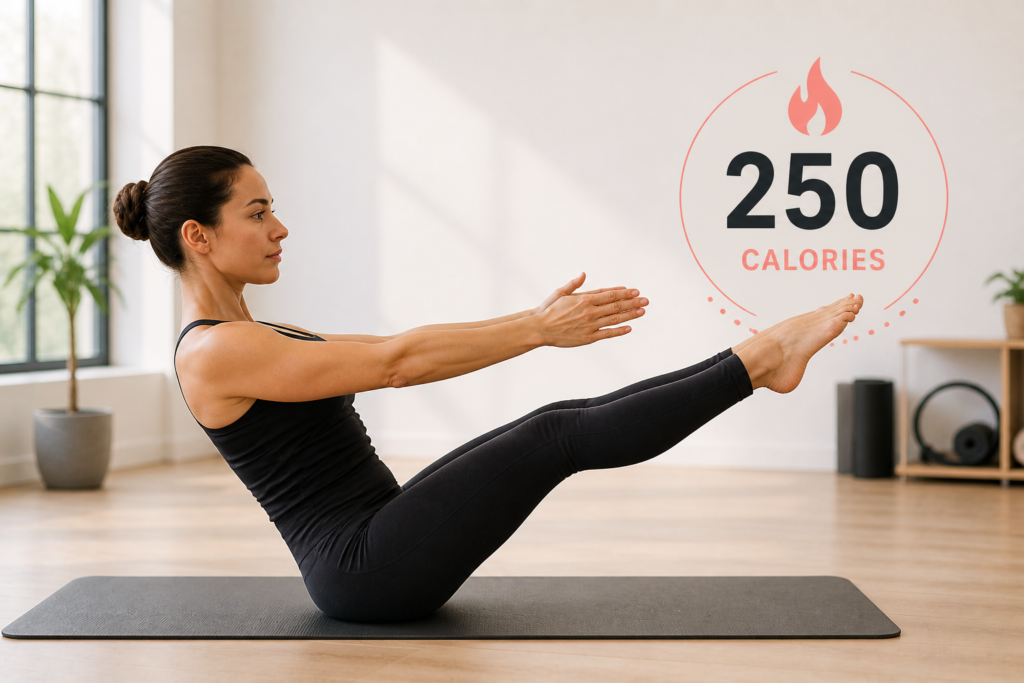
Counting calories might sound simple. Throw in Pilates, and suddenly things get delightfully nuanced. The essential question—how many calories does Pilates burn?—has a surprisingly layered answer, influenced by your weight, class style, intensity, and even the equipment you use. On average, someone weighing about 150 pounds burns 180-250 calories per hour with mat Pilates and 250-320 calories per hour in reformer classes. But those numbers shift with every detail, and understanding the deeper why behind them can help you tailor your own Pilates workout to your goals and get the most value from every sweaty minute.
Most people find Pilates doesn’t always torch calories the way running or spinning does—yet it remains a mainstay in fitness communities for good reason. Here’s the quick bottom line: Calories burned during Pilates depend on your weight, body composition, intensity, session duration, and the equipment you use. Reformer Pilates usually burns more calories per hour than mat classes. Even short Pilates sessions, when done with focused intent, build lean muscle and encourage calorie expenditure long after you’ve rolled up your mat. Now, let’s break down why the numbers vary and how to make Pilates work for your body and your goals.
Understanding How Many Calories Does Pilates Burn
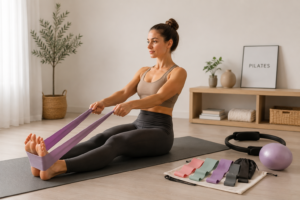
Stepping into a Pilates class, there’s a certain quiet focus, almost a hum in the air. You might see people gripping resistance bands, moving through slow controlled sequences, or working the springs on a reformer with careful intent. In the background, everyone’s got a question floating in their mind: “How many calories are burned during Pilates, and is this effort really changing anything in my body?”
The calories burned doing Pilates are the result of several overlapping factors—your weight, your muscle-to-fat ratio, the pace and style of the class, and even individual metabolism quirks. The main equation underpinning calorie burn is built around METs (Metabolic Equivalent of Task), which estimate energy use during physical activity relative to resting. For Pilates, MET values usually range from 3.0 for mat work up to 4.8 for more equipment-heavy or intense sessions1.
All this means a 150-pound person might burn anywhere from 180 to 320 calories per hour, depending on variables. Pilates doesn’t usually aim for massive calorie deficits but instead emphasizes balanced, low-impact movements that build strength and core stability. That’s partly why even after completing multiple hundred reps, you’ll hear people say, “It sneaks up on you—it’s a different kind of burn.”
Factors That Affect Calories Burned During Pilates
Try asking a group of Pilates enthusiasts how many calories they torch in a session. Chances are, every answer comes with a qualifying “it depends”—and for good reason. Five specific factors shape the numbers more than anything else.
Body Weight and Composition
Your own body weight acts as the baseline for calorie burn math. The heavier your body, the more energy it takes to move through a workout. This isn’t just about bulk; muscle mass also quietly drives up calorie use, since muscle tissue burns more calories at rest than fat tissue. People with more muscle naturally burn more calories per session, both during exercise and after, as muscle raises the body’s basal metabolic rate2.
This is why two people—one weighing 120 pounds, another at 200 pounds—will see notably different results for the same class. A 120-pound person may burn just 150-200 calories in an hour, while someone weighing 200 pounds could see that number closer to 300 calories or more, even if both put in the same effort.
Workout Intensity and Style
Intensity does more than just set the mood in class. Pilates can move from gentle mobility sessions to advanced reformer routines that leave the sweat dripping. More vigorous routines—think fast-paced, advanced mat classes, or higher-resistance reformer workouts—engage more muscles and demand greater energy from your body, spiking calorie burn numbers easily up to or beyond the top of average ranges. Quicker transitions and compound, full-body moves can elevate heart rates similarly to moderate cardio.
On the other hand, restorative or ultra-controlled sessions with long holds (or lots of correction time between sets) burn fewer calories. As the saying goes, “It’s not just what moves you’re doing, but how you’re doing them.”
Duration and Frequency of Sessions
Of course, all bets are off if you’re not in class long enough for the math to matter. Someone squeezing in a quick 10-minute routine won’t end up with the same calorie deficit as a dedicated hour-long class. Total calories burned climb predictably with longer sessions. But there’s a multiplying effect at play: those who practice more frequently or consistently increase their overall calorie burn over the course of a week, keeping metabolism chugging along at a steady pace3—even if each session is short.
Consistency also allows for another quiet win. Regular Pilates practice builds lean muscle, subtly raising your baseline calorie requirements even on non-Pilates days.
Calories Burned in Different Types of Pilates
Not all Pilates is created equal when it comes to calorie burn. The ongoing debate—reformer or mat—lives on in community classes and home studios, and the answer says a lot about how energetic your session will be.
Mat Pilates vs. Reformer Pilates Calorie Burn
Mat Pilates uses bodyweight resistance and rarely takes the heart rate into high gear. Think precise movement, focused breathing, and a steady core challenge. Most people weighing 150 pounds will burn about 180-250 calories in an hour of traditional mat Pilates1. Some foundational classes may stay even lower, while intense mat-based interval sessions can nudge things a bit higher.
Reformer Pilates, on the other hand, introduces extra resistance through springs and pulleys, often involving more muscle groups at once. This equipment turns up the intensity and can help you reach 250-320 calories per hour or even higher if the class is paced quickly and resistance is cranked up. Anecdotes from popular studios suggest some high-intensity reformer classes clock in at 300-500 calories per 45 minutes for heavier, more experienced participants2.
| Estimated Calorie Burn: Mat vs. Reformer Pilates (150 lbs person, per hour) | ||
| Type | Calories Burned | Intensity Notes |
|---|---|---|
| Mat Pilates | 180-250 | Bodyweight, lower heart rate |
| Reformer Pilates | 250-320 | Added resistance, increased heart rate |
Pilates for Beginners vs. Advanced Caloric Expenditure
Beginner Pilates classes often emphasize fundamentals: alignment, technique, controlled transitions, and slower pacing. While these sessions lay an important foundation and can still provide a moderate calorie burn (lower end of the range), the total isn’t likely to rival advanced, faster-paced routines. Over time, as your technique improves, the body becomes more efficient—meaning you might burn slightly fewer calories doing the same moves as you did on day one, unless you bump up intensity or complexity.
Advanced Pilates, with brisk flows, higher resistance, and compound sequences, ramps up both the challenge and the metabolic demand. People taking advanced reformer classes or incorporating additional equipment often notice more post-class fatigue and, yes, a higher sweat factor. As a real-world aside: a regular at a neighborhood studio once joked, “You know it’s advanced when everyone’s shirt is two shades darker by the end!”
Not sure if Pilates is Cardio? Check out: Is Pilates Cardio? Find Out What Experts Say (2026)
Calories Burned in Pilates by Duration
Sometimes, you have just 10 or 20 minutes to sneak in a workout. Other days, you’re in the studio so long you lose track of time. The calorie payoff for Pilates, much like any fitness routine, stacks up in direct proportion to session length, although intensity always has the final say.
10 Minutes of Pilates
Short, focused sessions are a modern reality. For a 150-pound adult, 10 minutes of mat Pilates typically burns about 30-40 calories, and reformer Pilates can get closer to 45-55 calories depending on effort4. Not a huge dent calorie-wise—more like a warmup—but if you string several micro-sessions through your day, those numbers snowball.
20 Minutes of Pilates
Extend your practice to 20 minutes and calories burned generally double: mat Pilates clocks in at about 60-80 calories, while reformer or high-intensity routines can reach 80-120 calories for the same body weight4. Fast-moving, compound pilates intervals? You might hit the 120-150 calorie zone with effort.
30 Minutes of Pilates
A half-hour session—long enough to break a sweat, quick enough to fit between Zooms—will usually burn about 90-125 calories for standard mat Pilates and 125-160 for reformer styles, again for a 150-pound body. For people weighing more or working at a strong pace, those numbers edge even higher1.
45 Minutes of Pilates
At 45 minutes, mat Pilates burns 130-180 calories, while reformer Pilates pushes up to 180-240 calories. This length is a common sweet spot in group classes, allowing for consistent movement, multiple sequences, and just enough challenge to feel the work without crossing into fatigue2.
50 Minutes of Pilates
Some reformer studios set classes at the 50-minute mark. Here, expect 200-270 calories burned for most adults, especially those working at a steady, above-average pace (or dealing with heavier resistance on the equipment). A few advanced practitioners report breaking 300, but that’s the upper limit for most people unless intensity is unusually high.
One Hour of Pilates
The classic benchmark. In 60 minutes, a moderate mat class brings about 180-250 calories burned for those near 150 pounds, with reformer sessions typically hitting 250-320 calories per hour1. For folks above 200 pounds or in higher-intensity environments, expect the ceiling to go even higher.
| Calories Burned in Pilates by Duration (150 lbs person, modifier: intensity applies) | ||
| Duration | Mat Pilates (low-moderate) | Reformer Pilates (moderate-high) |
|---|---|---|
| 10 min | 30-40 | 45-55 |
| 20 min | 60-80 | 80-120 |
| 30 min | 90-125 | 125-160 |
| 45 min | 130-180 | 180-240 |
| 50 min | 150-200 | 200-270 |
| 60 min | 180-250 | 250-320 |
Note: Numbers are typical ranges and depend on weight/intensity.
Average Calories Burned Doing Pilates: Standard Estimates
Stepping back to look at the averages, the big picture is pretty consistent regardless of the specifics. For most people weighing around 150 pounds:
- Mat Pilates burns about 180-250 calories per hour.
- Reformer Pilates hovers in the 250-320 calories per hour range, sometimes more with tempo and resistance.
- People weighing 120 pounds may burn 20-25% less, while those at 200 pounds burn around 30% more, due to body weight’s effect on total energy requirements.
Experienced instructors often say it this way: “Pilates might not burn it off fast—but it teaches your body to burn more even when you’re not moving.” A nice side benefit people notice with regular practice? Lean muscle gain, which keeps that daily calorie burn churning upwards over time, even on rest days2.
How to Calculate Calories Burned During Pilates
Now for a touch of math, minus the headache. Calculating how many calories are burned in Pilates starts with a simple formula supported by exercise science1:
- Convert your body weight from pounds to kilograms (divide by 2.205).
- Choose the MET value based on your Pilates activity (Mat = 3.0, Reformer = 4.5, higher for advanced/equipment work).
- Multiply MET × Weight (kg) × Duration (in hours).
For example, a 150 lb (68 kg) person doing reformer Pilates (MET 4.5) for 1 hour: 4.5 × 68 × 1 = 306 calories burned.
Pilates Calorie Burn Calculators
For those not keen on hand calculations, online Pilates calorie calculators can simplify the process. You’ll input your weight, the Pilates equipment you used, and the duration for a quick estimate. These calculators usually let you compare types (mat, reformer, resistance band, etc.), showing at a glance how each impacts your calorie totals1.
- Mat Pilates MET: 3.0
- Reformer Pilates MET: 4.5
- Cadillac/Trapeze MET: 4.8
Results from calculators are typically within 15% of your actual expenditure, with the final number modulated by your personal metabolism and intensity, so treat them as solid estimates, not exact science.
Tracking Calories Burned with Fitness Devices
Modern fitness trackers and smartwatches have their own algorithms to estimate calories burned during Pilates. These often use a combination of heart rate, motion, and user-input data (age, weight, sex) to generate live feedback. While convenient and motivating, it’s worth noting that the accuracy varies, especially for mixed-movement activities like Pilates where sustained heart rates aren’t as high as in running or cycling.
Savvy practitioners use wearables to observe trends and long-term changes in calorie burn, even if the real-time number isn’t perfectly precise. If you notice your calorie total climbing month to month, it almost always reflects real gains in intensity or efficiency.
Pilates and Weight Loss: What the Research Shows
Pilates stirs up debates in weight loss circles. On one hand, it’s rarely the class ranked “most calories burned per hour”—HIIT and spin typically claim that title. On the other, Pilates is famous for supporting sustainable, healthy body changes over time. So, is Pilates good for losing weight?
Research—paired with thousands of real stories from the Pilates community—shows that Pilates can support weight loss, mostly when it’s part of a larger healthy routine. Because Pilates builds lean muscle, which in turn increases your metabolic rate, the calories burned doing Pilates don’t end when you roll up your mat. Instead, there’s a quiet stacking effect, with increased muscle burning slightly more calories at rest, day after day2,5.
When paired with a balanced diet and other forms of activity, Pilates absolutely helps with fat loss and ongoing weight management. Some practitioners find that, even if the scale shifts slowly, what they see in the mirror changes dramatically—improved posture, a tighter core, and greater confidence in movement. It’s that kind of real-world result that’s prompted people to say, “Pilates doesn’t just sculpt the body you want; it gives you the energy to keep it moving.”
Pilates vs. Other Workouts: Calorie Burn Comparison
Fitness often feels like a comparison game, especially in group exercise spaces. Here’s how Pilates stacks up in terms of calories burned against some popular workouts for a 150-pound adult:
| Calories Burned Per Hour (Estimated, 150 lbs Adult) | ||
| Workout | Calories Burned | Impact/Intensity |
|---|---|---|
| Yoga | 150-250 | Low, flexibility focus |
| Mat Pilates | 180-250 | Low-moderate, core focus |
| Reformer Pilates | 250-320 | Moderate+, strength, and resistance |
| Strength Training | 200-300 | Moderate, muscle-building |
| Rowing/Elliptical | 300-500 | Moderate-high, full-body |
| HIIT/Spin | 400-700 | High, cardio+strength |
| Running | 500-800 | High, cardiovascular |
You’ll notice Pilates isn’t at the very top for raw calorie burn, but it balances that fact with low-impact design, improved alignment, and whole-body conditioning. It’s the go-to for those wanting strength and flexibility without battering their joints or dreading the next day’s soreness. As the instructor in one reformer class once said, “Pilates is the workout that respects your knees and loves your back—while still getting your heart rate up.”
FAQs: Calories Burned Doing Pilates
How many calories do you burn from 30 minutes of Pilates?
For a 150-pound person, 30 minutes of mat Pilates typically burns 90-125 calories, while the same duration of reformer Pilates usually reaches 125-160 calories, depending on how intense the session is1. For people with higher body weights or who are working especially hard, those numbers can be noticeably higher.
Is Pilates good for losing weight?
Pilates helps promote weight loss by building lean muscle, which, in turn, increases daily energy expenditure. While Pilates alone won’t create massive calorie deficits (compared to high-impact cardio), it supports fat loss, visible body sculpting, and a healthier metabolism. The real magic comes when Pilates is paired with a healthy diet and regular physical activity2,5.
Is yoga or Pilates better for spondylolisthesis?
Many people with spondylolisthesis find Pilates especially helpful due to its focus on core support, alignment, and mindful movement, which help stabilize the spine and reduce risk of aggravation. Yoga can be valuable too, but Pilates’ emphasis on core stability generally makes it the preferred option for spinal conditions—though always consult with a physical therapist before starting any new exercise program.
Why doesn’t Pilates burn a lot of calories?
The relatively lower calorie burn in Pilates compared to activities like running or HIIT comes from its controlled, low-impact movements, and intermittent muscle engagement. Pilates doesn’t typically keep the heart rate elevated for long periods; instead, the effort is built around balance, precision, and muscle activation rather than sheer exhaustion. Still, as most find, the benefits stretch well beyond the number on your fitness tracker.
Conclusion: Maximizing Calorie Burn With Pilates
The numbers behind how many calories Pilates burns tell a story—just not the whole story. Yes, Pilates might not be the most “calories burned per minute” champion, but it brings a unique combination of core strength, flexibility, postural improvement, and steady, sustainable calorie expenditure to the table.
Tips for Boosting Calories Burned During Pilates
- Choose reformer or advanced group classes for higher intensity and more resistance.
- Focus on compound movements that work multiple muscle groups at once.
- Increase session length and add intervals or faster transitions for an extra metabolic push.
- Stay consistent—muscle gained from regular Pilates will drive up daily calorie needs over time.
- Combine Pilates with aerobic activity elsewhere in your routine for balanced calorie burn and cardiovascular health.
Next Steps for Your Pilates Fitness Journey
If maximizing calories is your goal, take advantage of online calculators or fitness trackers to tailor your sessions, gradually increase challenge, and celebrate personal progress over arbitrary numbers. Remember, the smartest moves combine sustainable routines and mindful movement—because ultimately, what matters most isn’t just the calories counted, but the energy, confidence, and health you carry beyond the studio. Pilates is the rare practice where small daily efforts quietly add up, reshaping both body and outlook with every session. Now that you know how many calories Pilates can burn, it’s your move—whether you’re working towards weight loss, building lifelong strength, or just seeking that satisfying, post-class calm.
References
- Pilates Calorie Calculator. PilatesCalculator.com. Accessed May 2026. https://www.pilatescalculator.com/.
- BODYROK. How Many Calories Does Pilates Burn? BODYROK Articles. Accessed May 2026. https://bodyrok.com/articles-bodyrok-how-many-calories-does-pilates-burn/.
- Cymbiotika. How Many Calories Does 20 Minutes of Pilates Burn? Fitness and Recovery Blog. Apr 2025. https://cymbiotika.com/blogs/fitness-and-recovery/how-many-calories-does-20-minutes-of-pilates-burn.
- Physical Activities Compendium 2024. Adult Energy Costs and MET Values. *editor-verified*.
- Pilates Conditioning Exercise Compendium 2024 Update. Pilates Calories and Weight Loss. *editor-verified*.