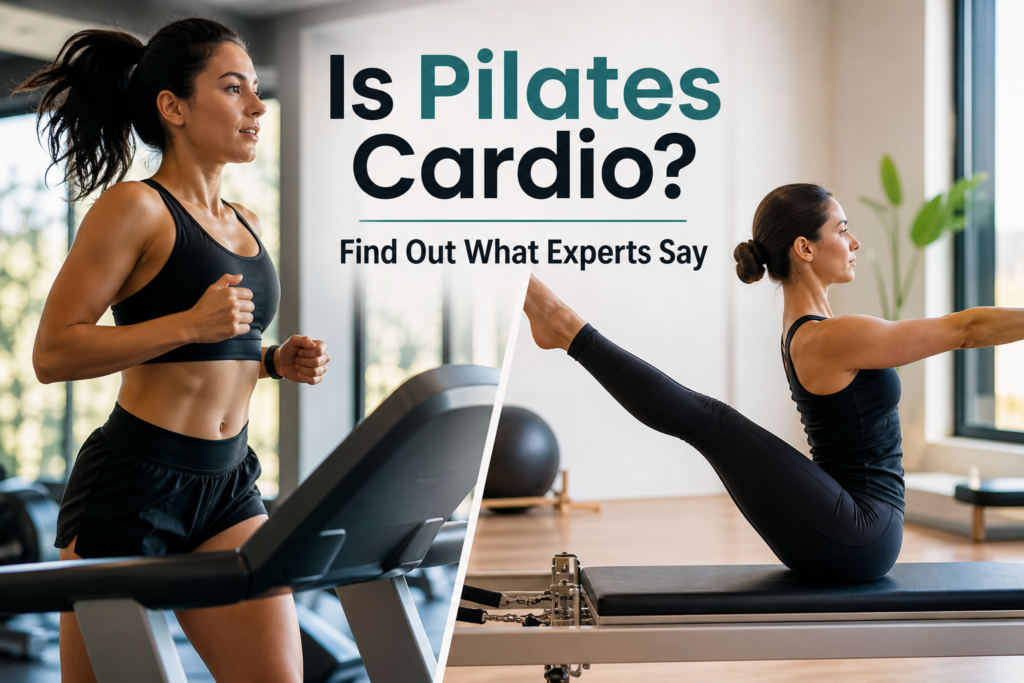
Pilates isn’t typically regarded as a traditional cardio workout, but certain styles and intensity levels can provide some cardiovascular benefits. While classic Pilates focuses on strength, control, and alignment, faster-paced or hybrid Pilates classes may elevate your heart rate, offering a low- to moderate-intensity cardio component.
Picture this: a group lying on mats, breathing in unison, muscles trembling through “the hundred,” and a gentle background playlist keeping the room rhythm steady. You’ll probably notice the focus on slow, controlled movements rather than breathless, high-paced action—and that’s by design. Still, the debate keeps swirling: is Pilates cardio, or something entirely different? Many people feel the burn, break a sweat, and wonder whether that hour-long session means they’ve checked the “cardio” box for the week. And if not, where does Pilates fit in the grand scheme of workouts? The dividing line between strength, cardio, and everything in-between gets delightfully blurry with Pilates, and that’s precisely where things get interesting.
Understanding Pilates: An Overview
Pilates, developed by Joseph Pilates in the early 20th century, built its foundation on mindful movement, body alignment, and improved core strength. The original method combined elements of gymnastics, calisthenics, and yoga, focusing deeply on the body’s powerhouse—meaning the core muscles that form the center of physical stability. Over the decades, Pilates has traveled far from those humble beginnings in New York. Fast-forward to today, and classes run the gamut from slow, restorative mat sessions to high-energy reformer routines with spring resistance and even jumpboards.
At its core, Pilates is about precision and control. Whether on a mat or equipment, people cycle through flowing sequences, activating deep muscle groups like the transversus abdominis, internal obliques, and pelvic floor. Every move is purposeful, emphasizing quality over quantity. Breathwork and alignment turn every push, lift, and stretch into a total-body conversation. While traditional Pilates steers toward low-impact, controlled strength, modern offshoots frequently blend in light props (think small weights or resistance bands) that nudge routines closer to cardio territory.1
What Defines a Cardio Workout?
Ask ten trainers what counts as cardio, and you’ll get a dinner party conversation that lasts an hour—at least. Technically, cardiovascular (or “aerobic”) exercise is any activity that raises your heart rate, challenges your lungs, and keeps you moving for a sustained period. The body relies more heavily on oxygen during these efforts, with the heart pumping harder to circulate blood—sometimes just enough that you begin to “feel it” and start to sweat.
Standard cardio exercises usher participants into a moderate to vigorous heart rate zone—usually at least 60-70% of their max for more than 10 minutes at a time. Jogging, cycling, swimming, and aerobic dance all fit squarely on the cardio spectrum. According to U.S. health guidelines, adults should aim for at least 150 minutes of moderate-intensity aerobic activity (or 75 of vigorous) per week. The main markers?
- Elevated heart and breath rate, often noticed as you move
- Sustained effort, not just brief spikes
- Challenge that’s more about endurance than strength
That’s the basic science, but, as anyone who’s ever lugged groceries up four flights of stairs knows, the line between cardio and daily effort can feel surprisingly subjective.
Is Pilates Cardio? Exploring the Primary Question
Is Pilates a Cardio Workout?
Most experts agree that Pilates isn’t a classic cardio workout in the way running or vigorous cycling is. Traditional Pilates sessions focus primarily on muscle control and core strength, often with substantial rests between sets or sequences that prioritize precision over pace. However, there’s nuance to consider: some Pilates classes, especially those labeled as “Power,” “Jumpboard,” or “Burn,” shift gears and quicken the tempo.2
When Pilates routines move at a faster clip—with minimal rests and large muscle groups engaged—heart rate can climb into low- to moderate-intensity zones. That means it might “count” as cardio for some people, or at least straddle the line. It’s a bit like brisk walking: it won’t max out your lungs, but it’s more than a stroll through the park.
Does Pilates Count as Cardio Exercise?
Here’s where it gets a bit technical. For Pilates to be considered a cardio exercise, the effort needs to consistently keep your heart rate in the aerobic zone for a good chunk of the class. In reality, most Pilates sessions involve intervals—periods where you move swiftly and breathe heavily, followed by slower phases focused on control. This structure means the cardiovascular stimulus is often intermittent rather than sustained.
Still, intermediate and advanced classes, or formats that use a jumpboard or circuit approach, can nudge your heart rate into that aerobic window, especially when transitions between exercises are brief and movements flow from one to another.1 Many discover that, when performed this way, Pilates can “count” as a mild form of cardio for those less focused on marathon-level endurance.
Is Pilates Regarded as a Form of Cardio?
Generally, Pilates is classed as strength-based training with benefits for core stability and overall muscle tone. Within the wellness community, it isn’t regarded as traditional cardio. That said, reformer and high-tempo mat Pilates classes are gaining popularity precisely because they offer both strength and a dash of cardio, offering a hybrid that appeals to modern fitness seekers. Ask around, and you’ll hear a range of opinions—some regard their fiery, sweat-filled Pilates sessions as their main cardiovascular event, while others see it firmly as strength or mobility work, accentuated by brief cardio-like spikes.3
Pilates Versus Other Exercise Types
It’s all too easy to think of exercise in tidy categories: strength, cardio, and flexibility, each sitting neatly on a separate shelf. In reality, most good workouts blur the lines. Pilates, as it turns out, lives in those in-between spaces—borrowing from each category without fitting perfectly in any single one.
Pilates Cardio vs Strength Training
Pilates shares features with both strength and cardio workouts but leans more toward strength training, especially of the core and stabilizer muscles. While you won’t find yourself powerlifting or breaking into a sprint mid-class, you will experience isometric and concentric muscle contractions that help sculpt and support the body. Classic Pilates uses body weight, small equipment, or resistance springs to challenge muscles gently but persistently—often for longer time under tension than a standard gym routine.1
Here’s the twist: a Pilates session performed without extra weights often improves muscle endurance and control more than raw power or hypertrophy (muscle size gain). At the same time, circuit-style and continuous-flow classes can create moments of elevated heart rate, crisscrossing strength with cardiovascular benefits. Basically, Pilates carves out a space between pure strength and pure cardio, weaving them together in a way traditional programs don’t always offer.
Pilates Cardio vs Weight Training
Weight training usually targets muscle growth through progressively heavier resistance and lower repetitions. It’s about pushing thresholds—overloading muscles until they adapt by getting bigger and stronger. Pilates, on the other hand, works through moderate resistance and higher repetitions, often focusing on stabilizer and postural muscles. Instead of chasing personal bests on squats or presses, participants develop fine-tuned control, flexibility, and resilience.2
While you can add light hand weights or ankle weights in Pilates, the weight load is nothing like a classic gym session—the benefits more often center on muscle tone, injury prevention, and longevity than max strength. Community discussions often point out that Pilates “supports” weight training goals, making lifters less prone to overuse injuries by improving mechanics and alignment.
Pilates Cardio vs Resistance Training
Resistance training involves using any force—weights, bands, springs, or even body mass—to challenge and strengthen muscles. Pilates fits here quite neatly, whether using body weight in mat classes or mechanical resistance on reformers and chairs. When the tempo picks up, and rest intervals shrink, Pilates starts to take on a cardio flavor, but resistance and control always drive the session.3
In short, Pilates is often regarded as a form of resistance training first, with potential to cross over into low-intensity cardio—especially in modern hybrid formats.
Intensity Levels: Is Pilates Cardio Intensive?
There’s nothing quite like finishing a Pilates class red-faced, heart thumping, and thinking, “Well, that felt like cardio.” But does it really fit the script? Traditional Pilates on the mat or reformer tends to fall in the low to moderate intensity window: enough to make you feel alive, rarely enough to leave you gasping for air.
That said, Pilates intensity is highly modifiable. Some instructors string together standing planks, dynamic squats, and rapid-fire lunges with barely a pause. Others build sessions around sustained core holds or gentle stretches. Equipment makes a big difference, too: the jumpboard, for example, allows for explosive spring-based movements that can leave even the fittest member feeling “cardio challenged.”1
Most people find the overall intensity of Pilates hovers below running, HIIT, or cycling, but surpasses gentle stretching or walking. Community experiences echo this—some swear by Pilates for the cardio challenge, while others view it as recovery between harder workouts.
Pilates Cardio Sculpt and Hybrid Classes
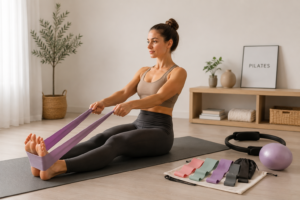
Now for the creative bit: so-called “Pilates Cardio Sculpt,” “Fat-Burning Pilates,” or other hybrid classes intentionally ramp up the tempo, blending classic moves with continuous flow, short rest periods, and even light cardio intervals. These classes often use props—bands, balls, sliders—to keep your muscles guessing and your heart rate climbing just enough.
Hybrid Pilates classes may not top out your aerobic capacity, but for many participants, they bridge the gap between strength and cardio routines, ticking both boxes with smart programming and dynamic energy. That’s especially appealing for those seeking variety and balanced fitness without the joint impact or monotony of pure cardio exercise.3
Pilates Cardio for Different Fitness Levels
- Beginners might find even classic mat Pilates brings mild cardiovascular challenge as their bodies adapt to new movement patterns. The focus stays on skill and technique over burning calories.
- Intermediate to advanced participants can handle continuous-flow classes or reformer workouts at a brisk tempo, pushing the envelope into real cardio territory—for a few minutes, at least.
- Older adults or those with joint concerns often appreciate Pilates for its low-impact, modifiable approach, gaining the benefits of gentle heart rate elevation and improved blood circulation without high-impact stress.
The bottom line? The cardio intensity of Pilates is what people—and their teachers—make of it.
Health Benefits of Pilates: Cardio and Beyond
Even if Pilates isn’t a textbook cardio session, the benefits ripple through the body—heart, mind, and musculoskeletal system included.
Pilates and Heart Health
While Pilates isn’t a direct hotline to maximum heart-pumping territory, studies do suggest it offers notable cardiovascular perks. Regular Pilates classes, especially those practiced three times a week for 60 minutes, can raise V02 max levels (a key measure of aerobic fitness) even more than regular walking.2 By supporting better breath control, oxygen use, and circulation, Pilates indirectly encourages a healthier cardiovascular system. The emphasis on deep, rhythmic breathing throughout also supports heart and lung synergy, a perk appreciated by runners and swimmers alike.1
Pilates, Cortisol Levels, and Stress
Ever stepped off your mat feeling lighter—mentally and physically? That’s not just the power of a solid stretch. Pilates has been associated with lowered cortisol levels, the body’s main stress hormone. The mindful attention to breath, posture, and present-moment awareness helps activate the parasympathetic nervous system, ushering in calm, focus, and stress relief.1
People often mention feeling grounded, calmer, and more energized post-class, underlining the mind-body benefits unique to Pilates. While not a cure-all for chronic stress or anxiety, pairing moderate physical effort with conscious breathing delivers a unique one-two punch for those wrestling with high cortisol.
How Pilates Compares to Other Workouts
Pilates swims upstream in the fitness world—not quite a fish in the “cardio sea” but not confined to the “weight room” either. The genre is broad enough to support everything from slow stretch to sweat-drenched power session, challenging old assumptions about what a workout should feel like or accomplish.
Pilates vs Yoga for Spondylolisthesis
Debate in physical therapy and wellness circles continues over the best choices for spondylolisthesis (a condition where one vertebra slips forward over another). Both yoga and Pilates can work, but Pilates is frequently recommended because of its emphasis on core stability, controlled movement, and neutral spine—all essential for stabilizing and protecting a compromised back.1
While gentle forms of yoga can support flexibility and relaxation, cautious progression and supervision matter, since some yoga poses might exacerbate certain spinal issues. Pilates exercises typically favor safe, controlled range of motion, making them a go-to for many seeking long-term back health.
Pilates and Traditional Cardio Exercises
On a spectrum, traditional cardio (running, brisk walking, swimming) keeps the heart rate high for a prolonged period, maximally engaging cardiorespiratory systems. Pilates, while less intensive in that context, supports those workouts in unique ways—improving posture, joint alignment, core strength, and breath control.1
Where traditional cardio focuses on endurance and heart health, Pilates builds the foundation—posture and stability—that makes those other workouts possible and, frankly, sustainable. Many active people find that regular Pilates practice reduces risk of injury, improves daily movement quality, and even enhances performance in traditional cardio routines.
- After a demanding run, Pilates stretches and stabilizes sore muscles.
- On off-days, Pilates keeps the body moving without high-impact fatigue.
- For the desk-bound, Pilates restores posture and energy without needing to log miles outdoors.
Curious to see the difference between Pilates and Lagree? Read this: Lagree vs Pilates: Simple Guide to Choosing the Right Fit
Common Myths and Misconceptions About Pilates Cardio
It’s easy—and common—to misinterpret Pilates based on a single class or someone else’s social media clip. Misconceptions run the gamut:
- Pilates can’t “be” cardio: Actually, recent hybrid formats can elevate heart rate just like a brisk walk or slow jog.3
- Pilates isn’t hard enough to count as exercise: The trembling abs and shaking arms tell another story—and that’s before trying a jumpboard class.
- Only older adults do Pilates: Group classes now attract every age, with athletes, dancers, and fitness newcomers alike getting on the mat.
- You’ll never sweat in Pilates: For many, this changes the first time an instructor strings together a non-stop, 50-minute flow.3
Community conversations, especially on platforms like Reddit, further reveal a broad spectrum: people debating whether Pilates “counts” as cardio or is best as a companion to running or cycling. There’s surprisingly little agreement—mainly because Pilates adapts to so many needs, styles, and fitness levels.
Pilates Cardio on Reddit and Community Perspectives
Zooming in on Reddit threads or community comment sections, you’ll spot debates about whether Pilates and cardio together are “enough” to tone up, lose weight, or replace strength training altogether. Some share stories of Pilates as their main exercise, noting visible shifts in posture, strength, and yes, heart rate. Others argue that for serious cardio health, standard aerobic training is still needed alongside Pilates.
One common refrain: “You’ll sweat—but if you really want to get your heart pumping, you’ll want to mix in traditional cardio, too.” The most practical advice echoes this: let Pilates be the foundation for stability, flexibility, and alignment, then complement it with activities that sustain a higher heart rate when that’s your goal.
FAQ: Is Pilates Cardio?
Is Pilates considered strength or cardio?
Pilates is best considered a strength and core stability workout with some flexibility and mobility training built in.1 Classic Pilates rarely qualifies as true cardio on its own, but certain class styles (especially “power” or hybrid versions) may offer a low- to moderate-intensity cardiovascular boost.3
Is Pilates good for high cortisol?
Yes, Pilates may help regulate high cortisol levels. By combining physical effort with mindful breathwork and intentional movement, Pilates supports the body’s stress-reduction pathways, encouraging balanced hormone levels and a sense of calm—qualities often missing from higher-intensity workouts.1
Which is better, cardio or Pilates?
There’s no one-size-fits-all answer. Pure cardio (like running or cycling) excels at raising heart and lung capacity, which is essential for cardiovascular health. Pilates, meanwhile, shines for core strength, injury prevention, posture, and mobility. The winning formula for most people is a blend: use Pilates to support and enhance overall fitness, alongside traditional cardio and, ideally, some classic resistance training.1
Is yoga or Pilates better for spondylolisthesis?
For people with spondylolisthesis, Pilates is often preferred because of its specific focus on core strength, spinal stability, and controlled movement. While gentle yoga has some benefits, care must be taken to avoid poses that hyperextend or destabilize the spine—something Pilates programming is designed to protect against.1
Conclusion: Final Thoughts on Pilates as Cardio
Pilates walks an intriguing line between strength, stability, flexibility, and—sometimes—cardio. Traditional classes emphasize muscle control and core engagement, while newer, faster formats edge into the realm of cardiovascular training. For many, Pilates is the bridge in a balanced fitness routine: quietly powerful, adaptable, and surprisingly challenging for both body and mind.
Recommendations for Incorporating Pilates Based on Fitness Goals
- If your goal is core strength and better posture: Classic Pilates 2–3 times a week works wonders.
- If you want a cardio-strength combo: Choose hybrid or “cardio sculpt” Pilates classes, keeping transitions short and tempo brisk.
- For maximum heart benefits: Blend Pilates with dedicated cardio (e.g., running, brisk walking), using Pilates for form, recovery, and mobility support.1
- For joint safety or rehabilitation: Start slow, focus on technique, and consider supervision if dealing with injuries or chronic pain.
Next Steps for Exploring Pilates Cardio Options
Curious about where Pilates can take you next? Try a beginner or hybrid class and pay attention to how your heart, breath, and muscles respond. Experiment with tempo, props, and class styles. A heart rate monitor can help clarify whether you’re staying in a strength or cardio zone. For most, a “best of both worlds” approach—mixing Pilates, traditional cardio, and resistance training—will pay off over the long haul. The best fitness routines aren’t about strict categories, but about feeling stronger, moving better, and enjoying the journey. In the end, Pilates may not always count as cardio, but it’s a flexible tool that fits almost every fitness story.
Is Pilates cardio? In the end, it’s as much about how you do it as what you call it.
References
- Crunch. Is Pilates Cardio? What Kind of Exercise Is It Anyway? https://www.crunch.com/thehub/is-pilates-cardio-what-kind-of-exercise-is-it-anyway/. February 19, 2026.
- Align Pilates Studios. Is Pilates Strength Training or Cardio? https://www.alignpilatesstudios.com/blog/is-pilates-strength-training-or-cardio. April 27, 2024.
- Peloton. Is Pilates Cardio? Here’s What Experts Have to Say. https://www.onepeloton.com/blog/is-pilates-cardio. May 15, 2025.